Vintage Sewing Machine Clipart Review
When I sit down to evaluate a new machine embroidery design, my first question is never about the file format or the stitch count. It is about utility and aesthetic longevity. In a market saturated with generic floral motifs and trendy slogans, finding a graphic that holds up as both a decorative element and a brand asset is rare. That is exactly why I decided to put this Vintage Sewing Machine Clipart through its paces. As an experienced designer who frequently collaborates with small business owners and Etsy sellers, I look for designs that translate seamlessly from screen to fabric without losing their soul in the stitching process.
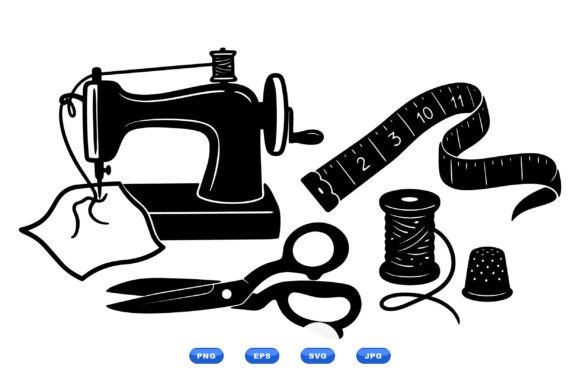
The premise here is straightforward: a retro sewing machine and tools depicted in bold black flat vector silhouettes. On paper, that sounds simple. In practice, simplicity is where most embroidery files fail. They either become muddy blobs on textured fabrics or lose all definition when scaled down. My initial impression of this embroidery file was one of clean confidence. The silhouette approach suggests a design that prioritizes clarity over intricate detail, which is a smart choice for anyone looking to produce high-volume handmade product lines without spending hours on tedious satin work.
The Mood and Visual Personality
Before we talk about thread tension, let’s talk about the vibe. This design immediately evokes a sense of heritage and craftsmanship. For creators in the Crafts category, particularly those focusing on Graphics and lifestyle branding, this image carries weight. It speaks to the history of making things by hand, even if you are using a modern computerized machine to execute it.
The use of bold, flat vectors means the design relies on strong negative space and clear outlines. This creates a "vintage mood" that fits perfectly into editorial layouts, craft branding, and pattern design. When I imagine this stitched onto a product, it doesn’t feel like a cheap sticker slapped on; it feels like an intentional statement. It appeals to the customer who values nostalgia and authenticity. Whether you are building a boutique brand around sustainable living or just selling cozy home goods, this visual language communicates reliability and timelessness.
Real-World Application: The Tote Bag Test
To truly judge an embroidery project, you have to imagine it on a real object. Let’s take a scenario that is common for many Etsy seller profiles: creating a custom embroidered tote bag for a local farmers market or a craft fair.
I envision placing this Vintage Sewing Machine Clipart on a heavy canvas tote in natural oatmeal or deep navy. Because the source is a bold black silhouette, it would pop beautifully against lighter backgrounds. The lack of tiny, fragile details means it won’t snag easily during wear, and the large shapes will hold up well to frequent washing—a crucial factor for tote bag design longevity. If I were designing a line of reusable shopping bags for a zero-waste shop, this design would serve as a perfect anchor. It tells the story of "making do and mending" without being overly literal.
Now, consider a different application: a baby item. A soft onesie or a muslin blanket featuring this motif could be quite charming. However, here is where my reviewer hat kicks in. While the silhouette style is generally safe, the context matters. A vintage sewing machine might feel slightly too industrial for a nursery unless balanced with softer surrounding elements. But for a "maker mom" brand or a handmade gift set that includes knitting needles and yarn, it fits the narrative perfectly. It positions the product not just as clothing, but as part of a creative lifestyle.
Technical Performance and Stitch Considerations
Translating vector art into stitch density requires careful planning. Since this design is described as flat vector silhouettes, it likely leans heavily on fill stitches or large satin borders rather than complex running stitch details. This is excellent for efficiency but demands respect for the fabric substrate.
When testing this for custom apparel like sweatshirts or hoodies, you must ensure your stabilizer choice is robust. Heavy cotton blends can buckle under dense fill stitches. If the design has large solid areas, I would recommend checking the underlay to prevent puckering. Conversely, because the shapes are bold, they tend to lay flat and smooth once stitched, giving a professional finish that elevates the perceived value of the finished product.
For embroidered patches, this silhouette style is ideal. Patches often suffer from detail loss due to the tight zigzag border required to seal them. A bold central image like this sewing machine remains legible even with a thick perimeter stitch. It makes for a strong logo placement on caps, hats, or denim jackets. The contrast between the black silhouette and the colorful patch background (if applique is used) creates a striking visual that stands out in crowded marketplaces.
Where Caution Is Required
No design is universally perfect, and there are specific scenarios where this digital embroidery file might struggle. First, avoid attempting this on highly textured fabrics like bouclé wool or heavy terry cloth unless you are using a significant amount of stabilizer and perhaps an applique technique to create a smooth base. The texture of the fabric can obscure the clean lines of the silhouette.
Second, be mindful of scale. While the design works well at medium sizes, shrinking it down to fit a very small hoop size on a cap front or a child’s sleeve might cause the internal details of the sewing machine (like the handwheel or bobbin area) to merge into a single dark shape. Always inspect small details before finalizing your production run. If you are aiming for a delicate, lacy look, this bold graphic might feel too heavy-handed. It is best suited for projects that embrace a rustic, sturdy, or graphic aesthetic.
Brand Consistency and Commercial Viability
For creative entrepreneurs and small shop owners, consistency is key. This Vintage Sewing Machine Clipart offers a versatile monochromatic base that can be adapted across various colorways. You can embroider it in cream on brown, white on black, or even metallic gold on navy for a premium touch. This adaptability allows you to maintain a cohesive brand identity across different product lines, from kitchen towels to pillow covers.
In terms of customer trust, high-quality execution of a simple design often signals professionalism more than a cluttered, overly complex one. Buyers appreciate clarity. When they see a crisp, well-stitched silhouette, they associate that precision with the quality of the entire product. This design supports that association. It also lends itself well to printable mockups for digital product previews, allowing you to showcase how the design looks on various garments without physically producing every sample.
Practical Designer Notes for Implementation
Before you commit this design to your production queue, follow these practical steps to ensure success:
- Test on Scrap Fabric: Always run a test stitch on the exact fabric type you plan to sell. Check how the threads interact with the weave.
- Check Thread Color Contrast: Ensure the thread color provides enough contrast against your fabric. Black silhouettes need light backgrounds, or vice versa, to maintain readability.
- Review Stitch Density: If the file contains dense fill areas, verify that your machine can handle the thickness without breaking needles or jamming.
- Confirm Hoop Size: Make sure the design dimensions fit comfortably within your standard hoops, leaving room for easy handling.
- Inspect Small Details: Zoom in on the digital preview. Are the gears and levers distinct? If they blur together, simplify the design digitally before converting to embroidery.
- Verify Licensing: Crucially, confirm whether you have commercial rights to sell finished items made with this design. Many design assets have restrictions on physical resale.
Ultimately, this Vintage Sewing Machine Clipart is a strong candidate for any designer looking to add a touch of heritage charm to their portfolio. It balances aesthetic appeal with technical practicality, making it suitable for everything from personal gifts to serious commercial ventures. By respecting its bold nature and testing it thoroughly, you can create personalized gifts and craft business items that resonate deeply with customers who appreciate the art of making.